Is My Foundation Crack Serious?
Almost every basement has a crack somewhere. The trick is telling the boring ones from the ones that matter, and that mostly comes down to three things: direction, width, and whether it's changing.
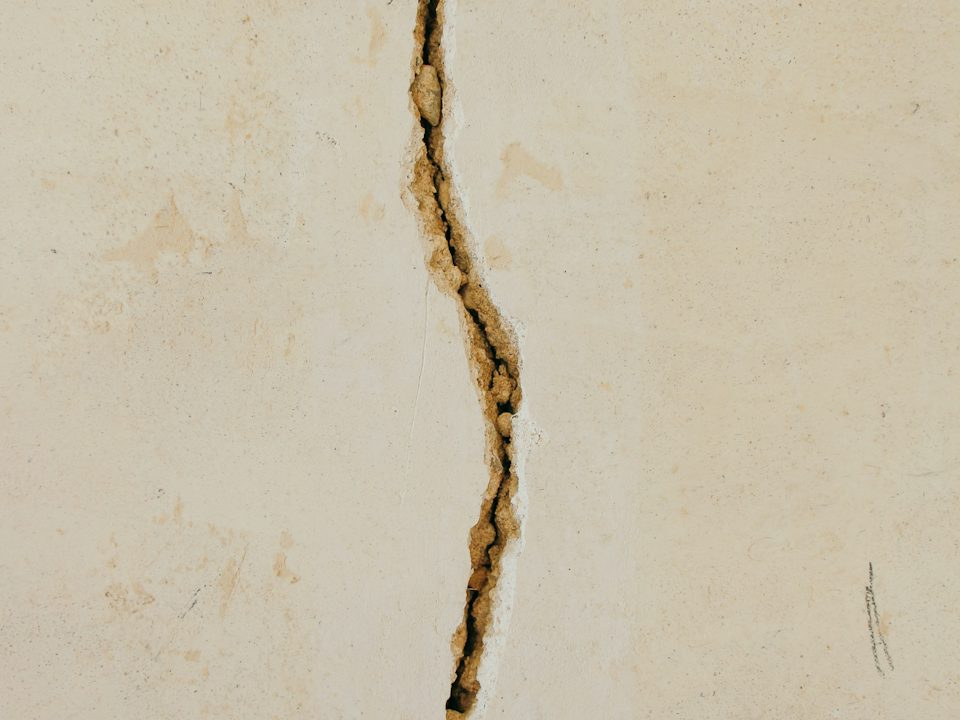
Is my crack serious?Page 24
When should you worry about a foundation crack? Worry about a crack that is horizontal, wider than 1/4 inch (about 6 mm), getting wider over time, or where one side sits further out than the other. Thin vertical cracks in poured concrete are usually shrinkage and mainly need sealing if they leak.
Below: the four crack types, a width scale, how to check if a crack is growing, and when to call a builder, a repair crew or an engineer.
Vertical foundation cracks
The most common crack in a poured concrete basement. Concrete shrinks a little as it cures, and the wall relieves that stress by cracking, usually straight up and down.
- Usually: not structural.
- Fix it if: water comes through, or you're about to cover the wall.
- Worry if: it's wider than 1/4 inch, one side has shifted out, or it keeps getting wider.
Horizontal foundation cracks
This is the one to take seriously. A horizontal crack usually means soil outside is pushing on the wall. Wet clay and frozen ground both push hard.
- Watch for: the wall bowing in at the crack, or a crack that runs along a row of blocks.
- What to do: have a structural engineer look at it before anyone repairs it.
Injection can stop the water. It won't stop the wall from moving.
Diagonal and stair-step cracks
Diagonal cracks in poured concrete often start at a corner or a window opening, where stress collects. Stair-step cracks follow the mortar joints in block or brick walls. Both can come from part of the house settling more than the rest.
- Usually: watch and measure.
- Worry if: it's wider than 1/4 inch, getting wider, or the block has shifted out of line.
Hairline cracks
A hairline crack is under about 1/16 inch (1.5 mm) wide. In a poured wall these are very common and rarely structural. Seal one if it leaks or before you finish the basement.
How can you tell if a crack is getting worse?
Measure it now and measure it again later. That's it.
- Mark both ends of the crack with a pencil line and today's date.
- Measure the width at the widest point with a tape measure or a crack gauge.
- Take a photo with the tape measure in the shot.
- Check again in three months, and again after the spring thaw.
If the crack has grown past your pencil marks or got wider, get it assessed.
Signs it's more than just a crack
- Doors or windows upstairs have started sticking
- The basement wall bows inward
- New gaps between the wall and the floor or ceiling
- Water comes in every time it rains
Any of these alongside a crack is a reason to call a structural engineer, not just a repair crew.
What about cracks in the basement floor?
Cracks in a basement floor slab are common. In most houses the slab doesn't hold the house up, so floor cracks are rarely structural. Seal one if water comes up through it.
New home with a crack? Call your builder first
In Ontario, water coming through the basement or foundation walls is covered by the Tarion two-year warranty on new homes. Dampness alone isn't covered, but actual water leaking in is. See Tarion's coverage page.
Who wrote this guide?
Brampton Foundation Crack Repair. We have 10 years of construction experience and repair foundation cracks in Brampton, Toronto and Mississauga.