Crack Injection in Brampton
Running caulk over a leaking crack is like putting tape on a burst pipe. The water is coming through the whole thickness of the wall, so the repair has to fill the whole thickness too. Crack injection is how we do foundation crack repair in Brampton from inside the basement.
Crack injectionPage 02
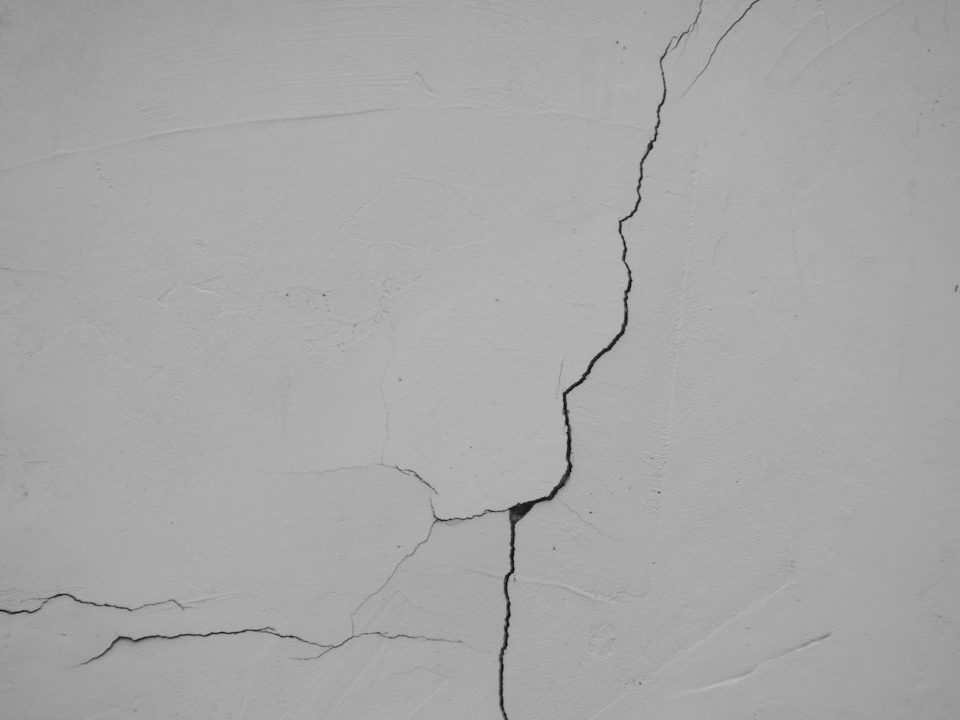
What is crack injection? Crack injection is a repair where liquid resin is pumped into a foundation crack through small ports until it fills the crack from the inside face of the wall to the soil side. Polyurethane is used to stop leaks. Epoxy is used when the crack also needs to be bonded back together.
Below: which resin your crack needs, how the job runs, when injection is the wrong fix, and what you have in hand when we're done.
Which resin does your crack need?
Both are pumped in the same way. What they do once they're inside the wall is different.
- Polyurethane expands into a flexible foam that blocks water. It's the usual choice for a leaking crack, and moisture actually helps it react. See polyurethane crack injection.
- Epoxy cures hard and glues the two sides of the crack back together. It's used on dry cracks that have stopped moving. See epoxy crack injection.
We pick the material after we see the crack.
The side-by-side comparison, with what each one can't do, is in epoxy vs. polyurethane crack injection.
How does a crack injection job run?
- Check the crack. Measure the width, look at the direction, and check whether one side has shifted. This is where we decide whether injection is the right repair at all.
- Prepare the surface. The crack is cleaned so the surface seal grips the concrete.
- Set the ports. Small injection ports go along the crack every few inches, and the face of the crack is sealed between them so resin can't run out.
- Inject. Resin goes in at low pressure from the lowest port up. When it appears at the next port, that section is full and we move up.
- Finish. After the resin sets, the ports are cut off and the wall is cleaned up.
A typical single crack takes a few hours. You don't need to move out, and there's no digging outside.
When is injection the wrong fix?
Here's where a lot of repairs go wrong: injection gets sold for problems it can't solve. It's the wrong fix when:
- The wall is concrete block, not poured concrete. Block walls are hollow inside, so resin spreads into the cores instead of filling the crack.
- The crack is horizontal, or the wall is bowing in. That usually means soil is pushing on the wall. Injection would seal the leak but leave the wall moving. A structural engineer should look at it first.
- The crack is still getting wider. Find out why before you seal it.
- Water comes in where the wall meets the floor, not through a crack. That's a drainage problem, not a crack problem.
Not sure which one you have? The home page crack scale shows the widths to watch for.
Can injection fix leaking tie-rod holes?
Yes. Those small rusty spots in a grid on a poured wall are holes left by the rods that held the concrete forms together. They're sealed the same way as a crack. See tie-rod hole leak repair.
What do you get when the job is done?
- A sealed crack, with ports trimmed flush
- A 10-year warranty against water coming through the repaired crack, which transfers to the next owner if you sell
We have 10 years of construction experience and carry $2 million in liability insurance.
What does crack injection cost?
Published Canadian price guides put interior crack injection at $500 to $1,500 per crack. Our price: $750 to $1,000 per crack, plus HST. See what moves the price in foundation crack repair cost in Ontario.
Where do we do crack injection?
Across Brampton, from Bramalea to Mount Pleasant, and in Toronto and Mississauga.