Crawl Space Encapsulation in Brampton
A damp crawl space doesn't stay under the floor. The moisture and the musty smell rise into the rooms above, and the wood framing over wet soil is where rot and mould start. Encapsulation seals the crawl space off from the ground. It's part of the basement leak repair work we do in Brampton.
Crawl space encapsulationPage 20
What is crawl space encapsulation? It means sealing a crawl space off from the ground and the outside air. A heavy plastic vapour barrier covers the floor and runs up the walls, with every seam and edge sealed. Vents and gaps are closed, and the space is kept dry with a dehumidifier or a supply of conditioned air.
Below: where crawl spaces turn up, the signs of trouble, how encapsulation goes in, and what it costs.
Where do crawl spaces turn up?
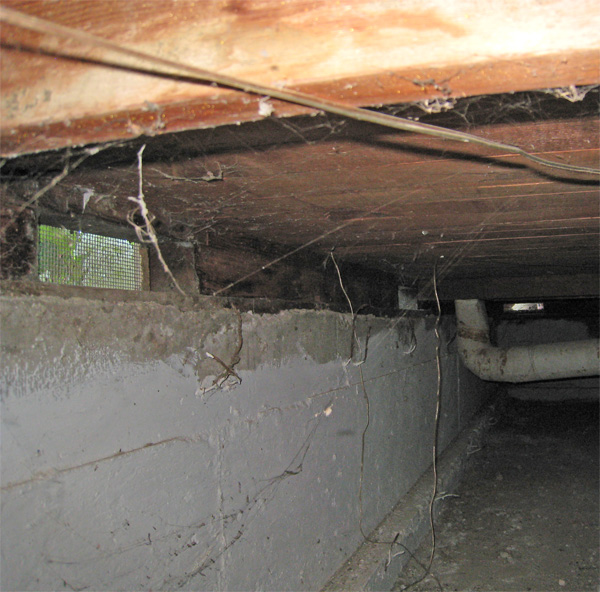
Most houses in Brampton have full basements. Crawl spaces usually show up under additions, sunrooms, enclosed porches and some split-level homes. Nobody goes in them, so they're easy to forget about until the smell reaches the rooms upstairs.
What are the signs your crawl space needs work?
- A musty smell in the rooms above it
- Bare soil, or an old torn sheet of plastic, on the crawl space floor
- Standing water after rain or snow melt
- Mould, white fuzz or dark stains on the floor joists
- Insulation sagging or falling down
- Cold, damp floors in the room above
How does encapsulation go in?
- Fix the water first. If water pools in the crawl space, it needs drainage, and sometimes a sump pump, before anything gets sealed. A barrier over standing water just traps it.
- Clear it out. Debris, old plastic and wet insulation come out. Any mould on the framing is dealt with before the space is sealed.
- Lay the vapour barrier. Heavy plastic sheeting covers the whole floor, with the seams overlapped and taped.
- Run it up the walls. The barrier continues up the foundation walls and is fastened and sealed along the top edge.
- Seal the openings. Vents and gaps to the outside are closed, and pipe and wire openings are sealed.
- Keep it dry. A dehumidifier, or a small supply of conditioned air from the house, holds the moisture down.
Our setup: a 10 mil vapour barrier over the floor and up the walls. Light surface mould on the framing is cleaned and treated before the barrier goes down. We can also insulate the foundation walls as part of the job.
Is a vapour barrier on the floor enough?
A sheet of plastic on the floor is the basic version, and it's better than bare soil. But if the walls and vents are left open, damp air still gets in and condenses on cold surfaces.
Think of it like a tent with a groundsheet but no walls. You stay off the wet ground, but the damp still blows in. Full encapsulation seals the walls and openings too, so the whole space stays dry.
What does crawl space encapsulation cost?
It depends on the size of the space, how easy it is to get into, and whether it needs drainage first. One Canadian cost guide, CostInsightHub, puts a basic job (a sealed vapour barrier for a 500 to 800 sq ft space) at $2,500 to $5,000, and a full system with a dehumidifier at $7,000 to $15,000 or more. We haven't found a stronger Ontario source, so treat those as rough.
Our price: a vapour barrier from $3,000 and full encapsulation from $7,500, plus HST.