Basement Floor Crack Repair in Brampton
Almost every basement floor cracks. Most of those cracks are harmless. A few let water or soil gas in, and those are worth sealing. Floor cracks are part of our foundation crack repair in Brampton.
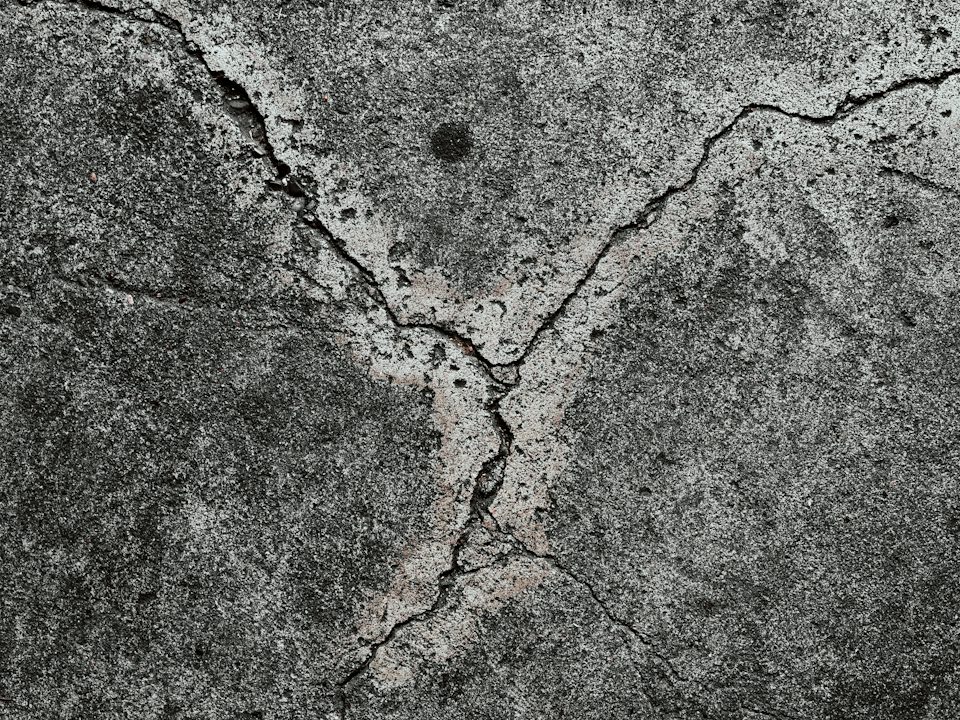
Floor crack repairPage 09
Should I repair a crack in my basement floor? Repair it if water seeps up through it, if it's wider than about 1/4 inch, if one side is higher than the other, or before you lay new flooring over it. Thin, dry shrinkage cracks are common in basement floor slabs and usually don't affect the structure of the house.
Below: why basement floors crack, which cracks matter, how they're repaired, and the radon question.
Why do basement floors crack?
- Shrinkage. Concrete shrinks as it cures. Thin cracks in the first year or two are normal.
- Settling. If the gravel or soil under the slab settles, the slab cracks above it.
- Water pressure from below. High groundwater pushes up on the slab and can open cracks or seep through them.
In most houses the basement floor doesn't hold the house up. The walls and footings do. That's why floor cracks are usually less serious than wall cracks.
Which floor cracks matter?
| What you see | What it usually means | What to do |
|---|---|---|
| Thin, dry crack | Shrinkage | Seal it if you're putting flooring down; otherwise watch it |
| Water seeping up through the crack | Groundwater pressure under the slab | Seal it, and check whether the drainage needs fixing |
| One side higher than the other | The slab has heaved or settled | Find out why before sealing |
| Crack wider than about 1/4 inch | Movement, not just shrinkage | Get it looked at |
How is a basement floor crack repaired?
- Clean the crack. Loose concrete and dirt come out so the filler bonds.
- Open it up if needed. Wider or uneven cracks are routed into a clean channel.
- Fill it. A flexible polyurethane sealant or an epoxy filler goes in, depending on whether the crack still moves.
- Finish it flush. The surface is levelled so flooring can go over it.
If water keeps coming up through the floor in several places, sealing cracks alone won't hold. That's a drainage problem under the slab, and it needs a drainage fix.
For cracks in the walls rather than the floor, see crack injection. For garage slabs, see garage floor crack repair.
What about radon?
Floor cracks are one of the ways soil gas, including radon, gets into a house. Sealing them helps, but it isn't a guaranteed fix on its own. Health Canada recommends testing every home for radon, and a long-term test is the only way to know your level.
What does it cost?
Sealing a few floor cracks is a small job compared with wall repairs. Our price: from $300, plus HST, with a 1-year warranty on our workmanship.