Epoxy Crack Injection in Brampton
Some cracks don't leak but still need fixing. A dry crack you're about to cover with drywall, or one an engineer wants bonded back together, calls for epoxy. It's the structural side of crack injection.
Epoxy injectionPage 04
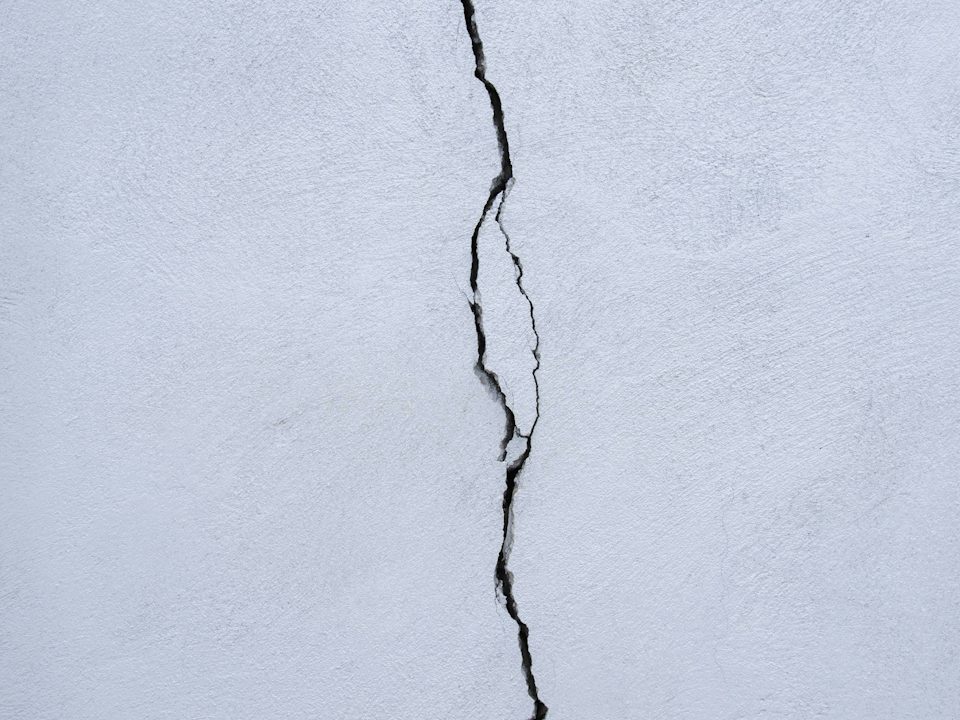
What is epoxy crack injection? It's a repair where a thin, two-part epoxy resin is pumped into a dry foundation crack through small ports. It cures into a hard solid that bonds the two sides of the crack back together, and the repaired crack can end up as strong as the concrete around it. It's not for actively leaking cracks.
Below: when epoxy is the right choice, how the job runs, when it's the wrong one, what to do about a bowing wall, and what it costs.
When is epoxy the right resin?
- The crack is dry and isn't leaking.
- It has stopped moving. Epoxy is rigid, so if the wall is still shifting, a new crack can open beside the repair.
- It needs strength, not just a seal. For example, an engineer wants the wall bonded back together once the cause of the movement is fixed.
- You're finishing the basement and want dry cracks repaired before the walls are covered.
- The wall is poured concrete, not block.
If the crack is leaking, polyurethane crack injection is usually the better fix.
How does an epoxy injection run?
- Check the crack. Make sure it's dry, stable, and that injection is the right repair at all.
- Clean the crack. Epoxy bonds to clean, dry concrete, so dust and loose material come out first.
- Set the ports and seal the surface. Ports go along the crack, and a paste seals the face between them so the resin stays inside.
- Inject slowly. Epoxy goes in at low pressure from the bottom port up. It's thin enough to work into fine cracks, but it takes time to fill them.
- Let it cure. The epoxy hardens inside the crack.
- Finish. The ports and surface paste come off, and the wall is ready to paint or cover.
When is epoxy the wrong fix?
- The crack is leaking now. Water keeps epoxy from bonding properly.
- The wall is still moving. Fix the cause first, or the wall will crack again beside the repair.
- Concrete block walls. The resin fills the hollow cores instead of the crack.
What if the wall is bowing in?
A horizontal crack, especially with the wall leaning or bulging into the basement, usually means the soil outside is pushing on it. Injection alone won't hold that wall. It can seal the crack, but the wall needs reinforcement.
A structural engineer should look at it first and decide the fix. Common options include:
- Carbon-fibre straps bonded to the inside face of the wall to stop it moving further
- Steel beams or braces set against the wall between the floor and the floor joists above
- Excavating to straighten or rebuild the wall, in severe cases
What does epoxy crack injection cost?
Published Canadian price guides put interior crack injection at $500 to $1,500 per crack. Reinforcement for a bowing wall is priced separately, after the engineer's recommendation.
Our price: $750 to $1,000 per crack, plus HST. The full breakdown is in foundation crack repair cost in Ontario. To compare both resins, see epoxy vs. polyurethane crack injection.